Categorías
Blog nuevo
¿Cómo reducir el tiempo de inactividad de SMT? Tu proceso de cambio de carrete podría ser la pieza que falta
Jul 19, 2026A medida que la industria electrónica continúa avanzando hacia la producción de alta mezcla y bajo volumen (HMLV), SMT los fabricantes están gestionando una variedad cada vez mayor de productos y cambios de producción más frecuentes. Como resultado, los cambios de carrete se han convertido en una parte rutinaria de las operaciones diarias, haciendo que el proceso de empalme de cinta sea un factor cada vez más importante para mantener una producción continua en la línea de producción SMT.
Cuando aumenta el tiempo de inactividad de producción o disminuye la eficiencia del cambio de carrete, muchos fabricantes se centran primero en acelerar el rendimiento de los operadores o añadir más personal. En realidad, sin embargo, el mayor desafío a menudo no es la rapidez con la que trabajan los operadores, sino si el proceso de empalme de cinta está estandarizado y es consistente.
¿Por qué el cambio de carretes se convierte en un cuello de botella para la producción SMT?
Cada cambio de carrete implica múltiples pasos, incluida la preparación de materiales, la alineación de la cinta portadora, el empalme de cinta empalme, la verificación del empalme y el recorte de la cinta. Cuando los cambios de carrete ocurren solo unas pocas veces al día, el impacto de las operaciones manuales es relativamente pequeño. Sin embargo, a medida que aumenta la variedad de productos, una línea de producción SMT puede requerir decenas o incluso cientos de cambios de carrete diarios. Con el tiempo, las diferencias en la experiencia de los operadores, los hábitos de trabajo y las técnicas de empalme inevitablemente se acumulan.
Incluso pequeñas variaciones en la alineación del empalme, la calidad del empalme o los procedimientos operativos pueden afectar el movimiento fluido de la cinta portadora a través del alimentador, aumentando la probabilidad de alarmas del alimentador, interrupciones en la alimentación de materiales o tiempos de inactividad SMT no planificados.
¿Cómo pueden los fabricantes optimizar el proceso de cambio de carretes?
Mejorar la eficiencia del cambio de carretes no consiste simplemente en completar el empalme de cinta más rápido.
En lugar de depender de la experiencia individual de los operadores, los fabricantes deberían centrarse en establecer un proceso estandarizado de empalme de cinta que permita a diferentes operadores y turnos de producción lograr resultados consistentes. Esto ayuda a mejorar la consistencia del empalme, reducir los errores humanos y favorecer una producción más estable.
A medida que la fabricación inteligente continúa evolucionando, más fabricantes SMT están adoptando máquinas automáticas de empalme SMT equipadas con sistemas inteligentes de visión, detección automática de cinta vacía, corte automático de cinta e integración con MES. Estas tecnologías ayudan a optimizar las operaciones de cambio de carretes mientras respaldan la automatización de fábrica y la gestión digital de la producción.
¿Cómo mejora la YOUNGPOOL TECHNOLOGYL-900 el proceso de cambio de carretes SMT?
Para satisfacer las demandas de la fabricación SMT moderna, YOUNGPOOL TECHNOLOGY ha desarrollado la L-900 máquina inteligente automática de empalme.
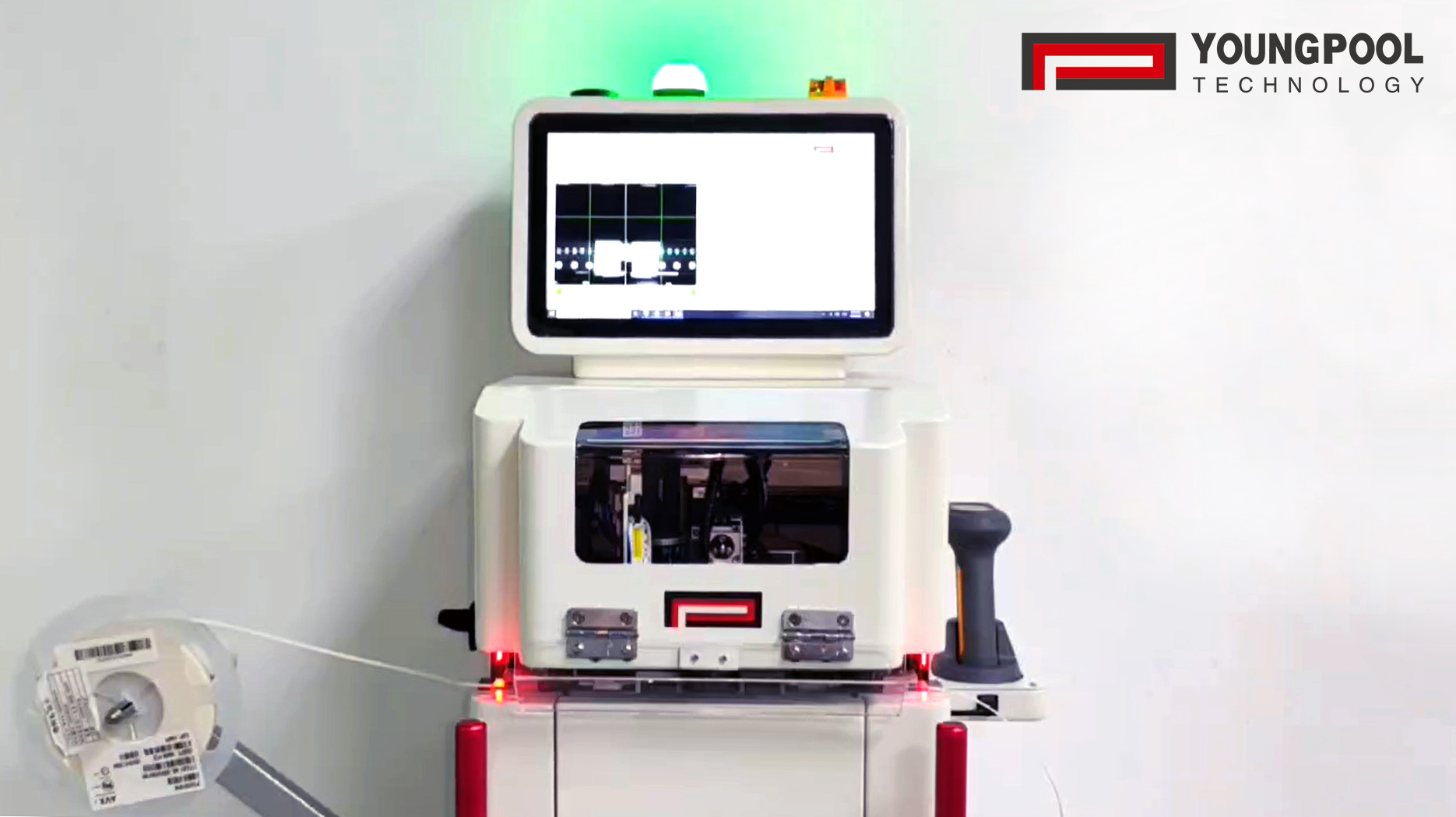
La L-900 cuenta con un sistema inteligente de visión que reconoce automáticamente y ayuda a posicionar la cinta portadora durante el proceso de empalme de cinta. Esto ayuda a reducir las variaciones causadas por la alineación manual y mejora la consistencia del empalme. La máquina admite cintas portadoras de 8 mm, 12 mm, 16 mm y 24 mm y es compatible tanto con cintas de papel como con cintas plásticas troqueladas, lo que la hace adecuada para la mayoría de los formatos comunes de embalaje de componentes SMT.
Además, la L-900 integra detección automática de cinta vacía, corte automático de cinta e integración con MES, ayudando a los fabricantes a reducir las operaciones manuales repetitivas mientras establecen un flujo de trabajo de cambio de carretes más estandarizado y digitalizado.
A medida que los cambios de carretes se vuelven más frecuentes en la producción SMT, el proceso de empalme de cinta desempeña un papel cada vez más importante en el mantenimiento de la estabilidad de la producción. Para los fabricantes que buscan reducir el tiempo de inactividad SMT y mejorar la eficiencia de producción, crear un proceso estandarizado y automatizado de cambio de carretes ofrece un mayor valor a largo plazo que simplemente aumentar la velocidad de los operadores. Elegir la solución adecuada de empalme automático SMT se está convirtiendo en un paso importante para los fabricantes electrónicos que buscan mayor productividad, mayor consistencia del proceso y operaciones de planta más confiables.


 Compatible con red IPv6