Categorías
Blog nuevo
¿Por qué algunas líneas de producción SMT logran una mayor eficiencia que otras? La diferencia suele depender de la estandarización del empalme de cintas
Jul 10, 2026Muchos fabricantes de SMT todavía dependen del empalme manual de cinta como parte de sus operaciones diarias de producción. Incluso cuando las fábricas utilizan el mismo modelo de producción, máquinas de colocación similares e incluso las mismas marcas de alimentadores, algunas líneas de producción mantienen un rendimiento estable mientras que otras experimentan con frecuencia tiempos de cambio de carrete más largos, “alarmas del alimentador”, o fluctuaciones en el rendimiento de producción.
¿Qué causa esta diferencia?
En muchos casos, el factor clave no es si el empalme de cinta se realiza manualmente, sino si el “proceso de empalme de cinta” está correctamente estandarizado. El empalme manual de cinta no es el problema—las operaciones inconsistentes sí lo son.
El empalme manual de cinta no significa necesariamente una baja eficiencia de producción. Los operadores cualificados son capaces de realizar empalmes de cinta de alta calidad. Sin embargo, en entornos de producción reales, diferentes operadores suelen tener distintos hábitos de trabajo, métodos de alineación y técnicas de empalme. Algunos logran una alineación de cinta más precisa, otros producen uniones de empalme más planas, mientras que algunos simplemente completan la operación más rápido. Cuando estas variaciones ocurren repetidamente en líneas de producción SMT con frecuentes **cambios de carrete**, mantener una **calidad de empalme** constante se vuelve cada vez más difícil.
Para los fabricantes, el verdadero desafío no es gestionar a operadores individuales, sino establecer un proceso de empalme de cinta estandarizado que ofrezca resultados consistentes sin importar quién realice la tarea.
¿Por qué la estandarización del empalme de cinta es cada vez más importante?
A medida que la fabricación de productos electrónicos continúa avanzando hacia la **producción de alta mezcla y bajo volumen (HMLV)**, los cambios de carrete se han convertido en una parte habitual de las operaciones diarias. Cuanto mayor sea la variedad de productos, con más frecuencia los operadores deberán realizar empalmes de cinta. Si cada empalme depende principalmente de la experiencia individual, los tiempos de operación pueden variar y las inconsistencias en la calidad del empalme pueden afectar la estabilidad de la alimentación de materiales.
En comparación con las operaciones basadas en la experiencia, un proceso de empalme de cinta estandarizado permite que diferentes operadores y turnos de producción logren resultados más consistentes, reduciendo la variabilidad de producción y mejorando la gestión de planta. Por eso, cada vez más fabricantes están convirtiendo la **estandarización del empalme de cinta** en una parte importante de su estrategia de mejora continua.
¿Cómo puede el equipo automático de empalme de cinta ayudar a estandarizar el proceso?
El valor de **los equipos automáticos de empalme de cinta** va mucho más allá de reducir el trabajo manual. Más importante aún, estandariza el proceso de empalme de cinta siguiendo procedimientos operativos consistentes, ayudando a garantizar que cada empalme cumpla con el mismo estándar de calidad. Para las líneas de producción SMT con frecuentes cambios de carrete, el empalme de cinta estandarizado mejora la **consistencia del empalme**, permite una alimentación de materiales más estable y facilita el establecimiento de prácticas unificadas de gestión de producción.
A medida que la fabricación inteligente continúa evolucionando, las modernas **máquinas automáticas de empalme SMT** integran cada vez más sistemas inteligentes de visión, detección automática de cinta vacía, corte automático de cinta e **integración con MES**, transformando el empalme de cinta de una tarea dependiente del operador en un proceso de producción estandarizado y digitalizado.
¿Cómo ayuda la L-900 de YOUNGPOOL a estandarizar el empalme de cinta?
Para satisfacer las demandas de la fabricación SMT moderna, YOUNGPOOL desarrolló la **L-900 inteligente máquina automática de empalme**. La L-900 cuenta con un sistema inteligente de visión que ayuda al reconocimiento y posicionamiento de la cinta portadora durante el proceso de empalme de cinta, ayudando a reducir las variaciones causadas por la alineación manual y mejorar la **consistencia del empalme**.
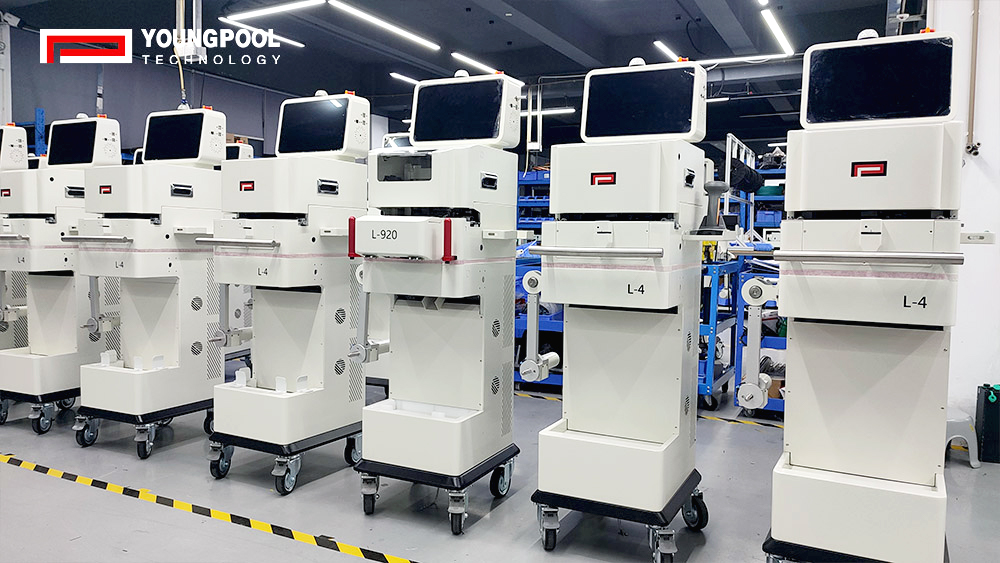
La máquina admite **cintas portadoras de 8 mm, 12 mm, 16 mm y 24 mm** y es compatible tanto con cintas de papel como con cintas plásticas gofradas, lo que la hace adecuada para la mayoría de los formatos comunes de embalaje de componentes SMT. Además, la L-900 integra **detección automática de cinta vacía**, **corte automático de cinta** e **integración con MES**, ayudando a los fabricantes a reducir las operaciones manuales repetitivas y a establecer un flujo de trabajo de empalme de cintas más estandarizado y digitalizado.
Para los fabricantes de SMT, las diferencias en la eficiencia de producción a menudo no están determinadas únicamente por los equipos, sino por la consistencia de los procesos de producción.
Cuando el proceso de empalme de cintas se vuelve más estandarizado, cada **cambio de carrete** se vuelve más consistente, mejora la **eficiencia del cambio de carrete** y se puede reducir significativamente la variabilidad de producción causada por factores humanos.
A medida que la industria de fabricación electrónica continúa avanzando hacia la automatización y la digitalización, implementar una **Solución de Empalme Automático SMT** estandarizada se está convirtiendo en un paso cada vez más importante para los fabricantes que buscan una mayor productividad, una mayor consistencia de procesos y una gestión de producción más eficiente.


 Compatible con red IPv6